
TRENCHLESS INSIGHTS / GCC INFRASTRUCTURE
Internal Pipe Coating: Robotic Protection for Pipelines
Engineering better access. Restoring network performance.
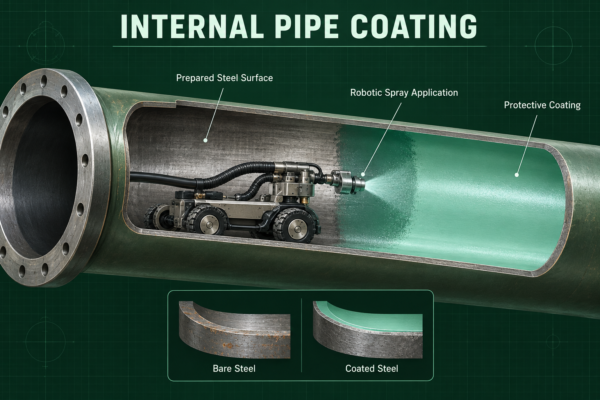
Internal pipe coating creates a protective barrier between a pipeline’s inner surface and the material it carries. Depending on the coating system, it can help control corrosion, resist wear, or improve surface characteristics such as friction.
Coatings are applied to new pipelines and renewed during maintenance. Steel and cast iron pipes are common applications, including locations where dismantling the pipeline would be difficult.
01
How Robotic Coating Works
A robotic platform carries an application tool inside the pipeline. The coating equipment and supply pump are selected for the material being applied, including compatible single-component or two-component systems.
JettyRobot describes equipment capable of negotiating bends and vertical sections. This access can reduce the number of pipeline openings and associated excavation required for suitable projects.
02
Surface Preparation Before Coating
Coating renewal also involves removing deteriorated material and preparing the underlying surface. Available robotic methods include:
High-pressure water jetting: removes rust and old coatings.
Abrasive blasting: removes contamination while creating a surface profile suitable for recoating.
Dry ice blasting: can address certain cleaning tasks and light surface corrosion.
The preparation method must suit the existing surface and the intended coating system.
03
A Practical Pipeline Renewal Example
At the Dlouhé stráně hydroelectric power station, JettyRobot reports using robotic water jetting to remove corrosion and an existing penstock coating, followed by airless application of a new single-component coating.
The project demonstrates how preparation and application can form one coordinated renewal process while keeping workers outside the penstock during application. Its reported results relate to that particular project.
04
High-Pressure Water Jetting
Water jetting can remove corrosion and old coatings. It is one option for cleaning internal pipe surfaces before subsequent treatment.
05
Dry Ice Blasting
Dry ice blasting can remove light surface corrosion in suitable applications. Adding abrasive media can extend its cleaning capability. Because dry ice sublimates, it does not leave spent dry ice media for disposal, although removed contaminants still require management.
06
Planning an Internal Pipe Coating Project
A useful project specification should connect the condition of the pipeline with the required coating performance. Before requesting a proposal, owners should organize the following information:
Pipe material, dimensions, length, and geometry.
Available entry points and access restrictions.
Existing coating type and observed deterioration.
Conveyed medium and operating conditions.
Available shutdown period.
Inspection and acceptance requirements.
This information gives contractors a clearer basis for proposing preparation methods, application equipment, and a realistic work programme.
07
Choosing the Right Coating System
The selection process should begin with the intended service conditions. A project brief should identify what the coating must achieve and ask the supplier to document its suitability.
For proposal comparison, request clear information about surface preparation, application conditions, specified thickness, curing requirements, and return-to-service criteria. These details help distinguish the coating material itself from the complete installed system.
The same approach applies to robotic equipment: access capability and application capability should both be reviewed. A robot’s ability to travel through a pipe does not, by itself, establish that the proposed coating process meets the project specification.
Frequently asked questions
What is composite patch repair?
Composite patch repair uses reinforcing fabric and resin to seal localized defects and strengthen damaged areas in industrial tanks.
Can composite patches repair leaking tanks?
Yes. Suitable composite systems can repair selected pinholes and through-wall defects, subject to an assessment of the damage and operating conditions.
Does composite patch repair require welding?
No. The patch is bonded to the prepared surface using resin and adhesive, without welding heat.
Where can composite patches be applied?
They can be used on tank bottoms, roofs, and shells to address localized corrosion, cracks, and damaged weld areas.
How long does a composite patch repair last?
Service life depends on the repair design, surface preparation, material compatibility, installation quality, and operating environment. It should be established for each application.
Plan your next rehabilitation project.
Need a trenchless rehabilitation solution for your pipeline or underground infrastructure project in the GCC? Contact our engineering team to discuss inspection findings, repair options and the most suitable rehabilitation approach for your asset.
Discuss your project