
TRENCHLESS INSIGHTS / GCC INFRASTRUCTURE
CIPP & Liner Systems for Trenchless Pipeline Rehabilitation
Engineering better access. Restoring network performance.
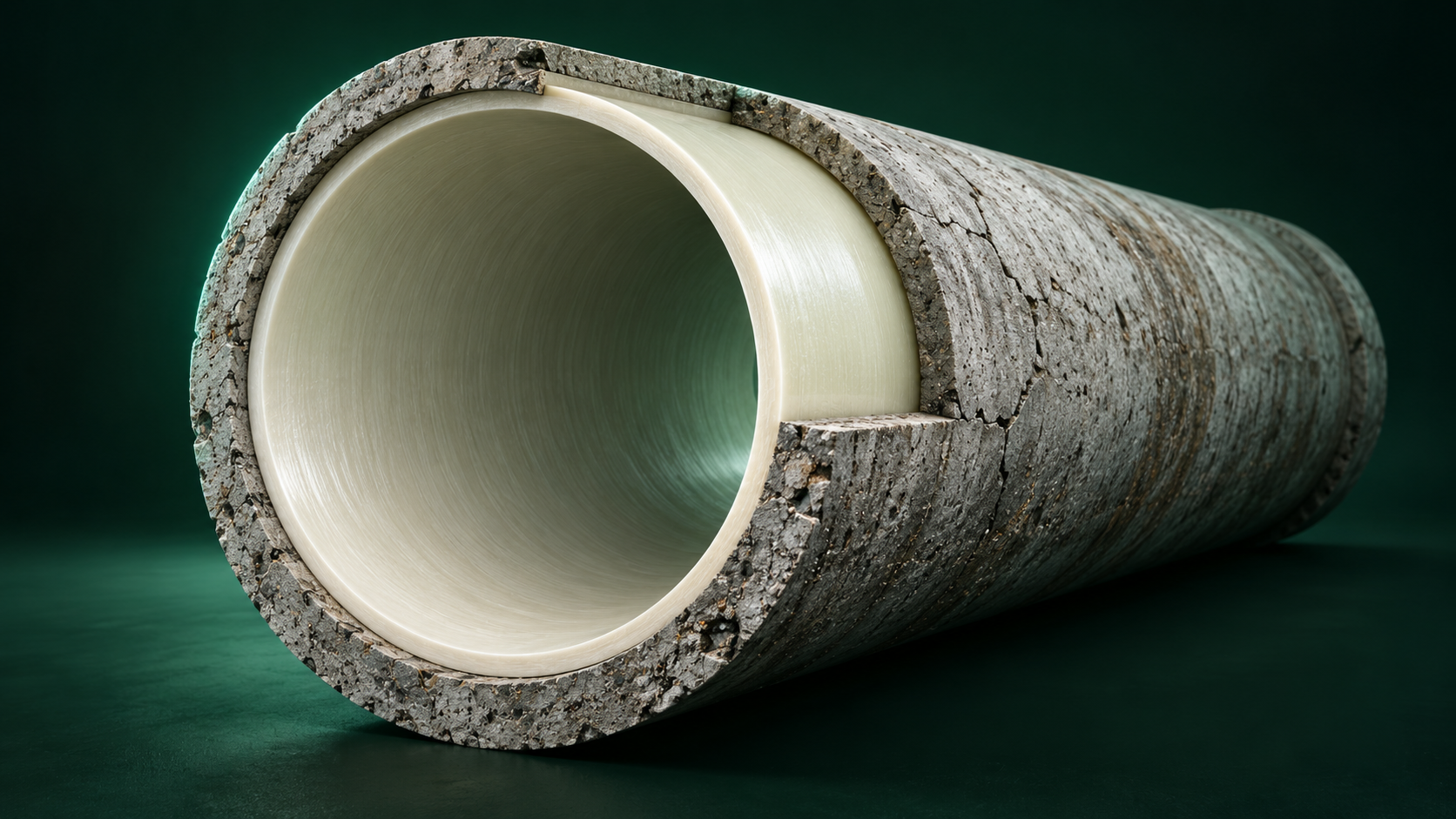
Cured-in-Place Pipe (CIPP) is one of the most established trenchless methods for rehabilitating deteriorated pipelines. A resin-impregnated liner is installed inside the existing pipe and cured to form a new pipe within the host pipe, allowing long pipeline sections to be rehabilitated with limited excavation.
01
How CIPP Rehabilitation Works
The existing pipeline is cleaned and inspected before lining. A flexible liner impregnated with the specified resin system is inserted or inverted into the pipe. The liner is then expanded against the host pipe and cured using the method appropriate to the system, creating a continuous rehabilitated section.
The design can be tailored to pipe diameter, geometry, groundwater, loading, host-pipe condition and required structural performance. Laterals and connections are reopened using robotic equipment where required.
02
Why CIPP Is Used for Sewer and Pipeline Rehabilitation
CIPP can rehabilitate long sections through existing access points, which reduces open-cut excavation, spoil removal, road reinstatement and disturbance to surrounding properties. It is therefore particularly valuable under roads, developed areas, landscaped sites and other locations where excavation has high indirect costs.
A completed liner can also provide a smooth internal surface and seal cracks, joints and infiltration paths within the rehabilitated length, subject to system design and installation quality.
03
Engineering Design and Pre-Lining Assessment
CIPP should be designed from reliable asset information rather than treated as a one-size-fits-all product. CCTV inspection, cleaning results, pipe geometry, deformation, groundwater, diameter changes, service connections and structural condition all affect the rehabilitation plan.
Severe localized defects may require point repair before lining. Access chambers may need modification, and bypass pumping can be required to maintain service during installation.
04
Quality Control During CIPP Installation
Installation quality affects long-term liner performance. Key controls can include resin handling, liner wet-out, insertion, pressure, curing parameters, sample testing, thickness verification and post-installation CCTV. Project specifications should define acceptance criteria appropriate to the selected liner system and design basis.
05
CIPP in the Saudi arabia,UAE and Wider GCC
CIPP is already used on significant regional infrastructure. For example, a 2025 Al Ain project reported 10.8 km of CIPP lining together with CCTV inspection, cleaning and localized patch repairs, illustrating how continuous lining and targeted repairs can be combined within one rehabilitation program.
Across the UAE, Saudi Arabia and other GCC markets, trenchless lining can help authorities and asset owners upgrade aging networks while reducing traffic disruption and construction footprint.
06
Where CIPP Can Be Applied
Applications include gravity sewers, stormwater lines and other compatible pipelines in municipal, industrial, residential, commercial, airport and infrastructure environments. Suitability depends on operating conditions and the chosen liner system.
07
Integrated Trenchless Rehabilitation
CIPP delivers the best value when it is part of a condition-based strategy. Leak detection, CCTV, chamber rehabilitation, point repair and patch repair can be coordinated with lining so that each defect receives an appropriate intervention.
Frequently asked questions
What does CIPP stand for?
CIPP stands for Cured-in-Place Pipe, a trenchless rehabilitation method that creates a new liner inside an existing pipeline.
Does CIPP require excavation?
Usually only limited access is required, often through existing manholes or chambers, although site-specific excavation may still be needed in some projects.
Is CIPP suitable for structural rehabilitation?
CIPP systems can be designed for structural performance, but the required design depends on host-pipe condition, loads, groundwater and project standards.
Which GCC projects can benefit from chamber redesign?
Can localized repairs be completed before CIPP?
Plan your next rehabilitation project.
Need a trenchless rehabilitation solution for your pipeline or underground infrastructure project in the GCC? Contact our engineering team to discuss inspection findings, repair options and the most suitable rehabilitation approach for your asset.
Discuss your project